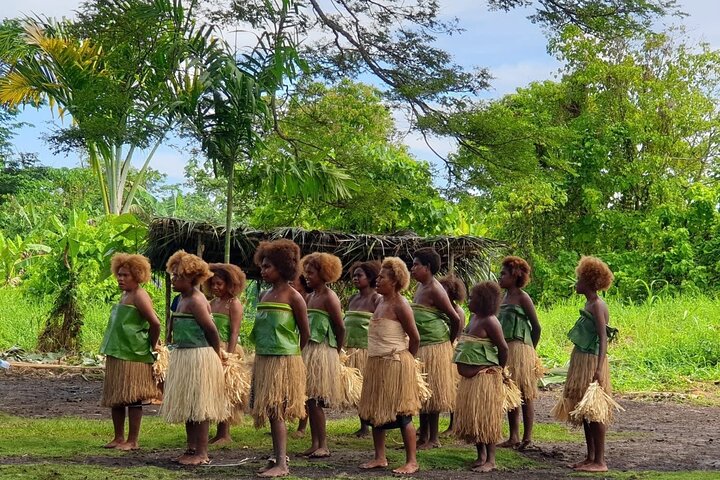
Things to Do in Solomon Islands
Sunken warships, living coral, and islands the world forgot
Top Things to Do in Solomon Islands
Find activities and tours you'll actually want to do. Book through our partners -- no booking fees.


Plan Your Trip
Essential guides for timing and budgeting
Climate Guide
Best times to visit based on weather and events
View guide →Day Trips
The best excursions and nearby destinations worth the journey
Explore day trips →Where to Stay
Best neighbourhoods, hotel picks, and booking tips
Find hotels →Travel Insurance
What's required, what coverage matters, and how to get a quote
Read guide →What to Pack
Climate-specific gear, essentials, and what to leave at home
See packing list →When Should You Visit Solomon Islands?
Tap a month for weather, crowds, and highlights
View full year-round climate guide →Explore Solomon Islands
Your Guide to Solomon Islands
About Solomon Islands
The Solomon Islands announce themselves through smell first. Step off the turboprop at Henderson Airport outside Honiara and warm air slaps you, thick with frangipani and the faint brine of Iron Bottom Sound. Dozens of warships from both sides of the Pacific War still rest on that seafloor. Honiara is no postcard capital.
It sprawls along Guadalcanal's north coast in a scrappy line of corrugated-roof shops and concrete government buildings. Traffic between Point Cruz and the Mataniko River bridge idles in red dust that coats everything by noon. Walk into Honiara Central Market on a Saturday morning and the country clicks into focus. Women from Malaita and the Western Province sit cross-legged behind pyramids of betel nut wrapped in mustard leaf.
Slippery cabbage, still damp from highland gardens, sits beside reef fish so fresh the scales flash silver under the tin roof. The real Solomon Islands live outside the capital. Marovo Lagoon in the Western Province is the largest saltwater lagoon on earth. This turquoise labyrinth of coral islands and mangrove channels still relies on dugout canoes as primary transport.
At Bonegi Beach, twenty minutes west of Honiara, a rusted Japanese transport ship sits in chest-deep water. You can wade right to it. Soft coral and parrotfish have colonized the hull. Infrastructure here is thin. Roads outside Honiara dissolve into mud after rain. Electricity runs on generators in most villages. Plans change with the weather and the tide.
That is the trade-off. It is also the point. The Solomon Islands have not been smoothed into a resort product. You get one of the last places in the Pacific where the reef is healthy, the culture is unperformed, and the only footprints on the beach are yours.
Travel Tips
Transportation: Solomon Airlines operates small prop planes between Honiara, Gizo, Munda, and Seghe. Booking these flights is effectively mandatory for reaching the Western Province unless you have several days to burn on a cargo boat. Flights sell out fast during school holidays and around Independence Day in August. Book as far ahead as you can. Within Honiara, shared minibuses run fixed routes for next to nothing. They stop after dark. For inter-island travel beyond the flight network, outboard-powered fiberglass boats are the default. Negotiate the fare and fuel contribution before you board. Confirm the driver carries life jackets. Understand that rough seas cancel everything. A crossing that takes forty minutes in calm water might not run at all if the wind picks up.
Money: The Solomon Islands run on cash. The Solomon Islands Dollar is the local currency. Outside Honiara you will find almost no ATMs and zero card readers. Withdraw what you need from the ANZ or BSP branches near Point Cruz before heading to the outer islands. Bring enough to cover your entire stay plus a buffer for weather delays. Torn or heavily worn notes get refused by market vendors. Check what the machine gives you. Accommodation owners in the Western Province sometimes quote in Australian dollars out of habit. Clarify the currency before agreeing to anything. Tipping is not customary and can feel awkward in village settings. If you want to show gratitude, a bag of rice or fishing line goes further than cash.
Cultural Respect: Kastom, the Melanesian system of customary law and land ownership, governs nearly everything outside Honiara. Land belongs to clans, not individuals. Wandering onto a beach or a reef without permission from the local chief is a genuine offence, not a suggestion. When you arrive in a village, ask to meet the chief first. Present a small gift of betel nut or tobacco. Explain what you would like to do. Women should cover shoulders and knees in village settings. Skull shrines on islands like Skull Island near Vona Vona Lagoon are sacred ancestral sites. Photograph only with explicit permission and never touch the remains. The effort of asking is repaid many times over. Villagers who know you respect kastom will feed you. They will guide you to reefs they show nobody else. They will tell stories that no guidebook carries.
Food Safety: Eat the fish. Seriously. Reef fish grilled over coconut husks on a beach is the best meal in the Solomon Islands. Kokoda, the local version of ceviche where raw reef fish is cured in lime juice and coconut cream, is worth seeking out at any chance. Honiara Central Market is the safest and freshest source of produce in the country. Avoid reheated rice dishes that have been sitting in the heat. Stick to fruit you can peel yourself outside the capital. Tap water is not safe anywhere in the Solomons. Drink sealed bottled water or use a filter. Village hosts will often cook for you over a wood fire. This food, typically taro or sweet potato baked in banana leaves with reef fish, is almost always safe because it is cooked fresh and served immediately.
When to Visit
The Solomon Islands hug the equator so tightly that temperatures refuse to budge. Daytime peaks at 31°C (88°F). Nighttime bottoms out at 25°C (77°F). All year. What does swing is the rain. From May to October the southeast trades blow, humidity drops, and Marovo Lagoon glows turquoise from the air. This is the dry season.
Diving visibility soars. Boats run on schedule. Village stays stay dry. July and August are the driest, the most crowded, the most alive. Independence Day on 7 August packs Honiara with dancers from every province. Canoe races jam the waterfront. Gizo and Munda rooms sell out weeks ahead. Domestic flights tighten. Book early.
November to April flips the script. Late-afternoon squalls crash in. Honiara side streets become ankle-deep rivers fast. Humidity punches past ninety percent and stays. Cyclones threaten from January to March. Direct hits are rarer than in Vanuatu or Fiji. Yet the risk is real. The payoff is price cuts and empty reefs.
Diving still works between storms. Water stays 28-29°C (82-84°F). Always warm. June and September deliver the sweet spot. Dry enough for island-hopping. Warm enough for a rashguard only. Quiet enough for private white-sand motus. April and November are shoulder gambles. Weather may falter. Solitude and savings arrive. January and February are for the hardcore.
Expect wet boots. Expect cancelled boats. Expect a Pacific island nation almost devoid of visitors.
More Ways to Experience Solomon Islands
Tours, day trips, and local experiences curated by on-the-ground operators.
Didn't see anything interesting yet?
Browse Viator's full catalog of tours, day trips, food experiences, and private guides in Solomon Islands.
See All Solomon Islands Tours on Viator