Things to Do in Solomon Islands in April
April weather, activities, events & insider tips
Low Season · Budget Friendly
April Weather in Solomon Islands
Long-run averages for April in Honiara
86°F (30°C)
High Temp
73°F (22°C)
Low Temp
8.4 inches (213 mm)
Rainfall
85%
Humidity
13
Sunny-Day UV
⚠ April falls within the tail end of the South Pacific cyclone season, which officially runs from November through April. The risk diminishes significantly by late April. Tropical depressions can still form. They bring sustained heavy rain, rough seas, and cancelled inter-island transport. Monitor weather forecasts through the Solomon Islands Meteorological Service. Maintain flexibility in your plans during the first half of the month.
⚠ Malaria risk is elevated in April. Residual wet-season mosquito breeding conditions are the cause. Standing water from recent rains creates active breeding sites across all provinces. Antimalarial prophylaxis is strongly recommended. Personal protection measures are essential. Use DEET-based repellent. Sleep under treated mosquito nets. Outer islands may not provide nets. Pack your own.
⚠ Coral cuts and tropical infections develop fast. Warm, humid conditions accelerate everything. Any open wound, no matter how minor, needs immediate cleaning with antiseptic. Cover it with a waterproof dressing. Infection can set in within hours in this climate. The nearest hospital-grade care is in Honiara. That may be a flight away from where you are. Treat every cut seriously.
Is April Right for You?
Weigh the advantages and considerations before booking
Advantages
- + April marks the tail end of the wet season. Rainfall in Honiara drops sharply from March's 14.3 inches (363 mm) to 8.4 inches (213 mm). You're catching the landscape at its greenest and most dramatic. The worst downpours have likely passed. Rivers still run high enough to kayak comfortably. Waterfalls hit full force. The jungle canopy on Guadalcanal's interior ridges looks almost impossibly lush.
- + Visitor numbers in the Solomon Islands stay thin year-round. April sits in the quietest stretch of an already quiet calendar. You might be the only snorkeler on a reef that rivals anything in Raja Ampat. WWII sites across Guadalcanal feel solitary. The dive operators and cultural tour guides who stay busy from June through September tend to have open schedules. More flexibility. Occasionally more attentive service.
- + Underwater visibility around the Florida Islands and the Russell Islands tends to be strong in April. Seasonal current patterns shift. Plankton blooms settle. Coral spawning events can still occur into early April. They draw manta rays and whale sharks closer to the outer reefs. For divers, this transitional window has a chance at pelagic encounters. The peak dry season rarely delivers them.
- + Accommodation rates across Honiara and the outer islands hit their most reasonable point in April. They sit well below the premiums charged during the dry season months of June through September. Booking a week ahead is usually sufficient for guesthouses and eco-lodges. Domestic flight seats on Solomon Airlines routes to Gizo or Munda are easier to secure. The drier months demand more advance planning.
Considerations
- − April still belongs to the wet season. That 8.4 inches (213 mm) of Honiara rainfall does not arrive in polite drizzles. Tropical downpours can be sudden and heavy. They turn unpaved roads on Guadalcanal's interior and across the outer islands into mud tracks within minutes. Inter-island boat schedules get disrupted. A planned day trip to Savo Island or Tulagi can evaporate if seas are rough. Hold your itinerary loosely.
- − Humidity at 85% is relentless. The air in Honiara sits heavy and warm from dawn onward. By midday any exertion beyond a slow walk leaves you drenched. Air conditioning is not standard outside the capital's newer buildings. Outer island accommodation runs on fans and cross-breezes at best. April will test you if you struggle in tropical humidity.
- − The Solomon Islands remain one of the most logistically challenging destinations in the Pacific. Domestic flights are infrequent and sometimes cancelled without much notice. Medical facilities outside Honiara are minimal. Supply chains to the outer provinces can be unreliable. April's residual wet-season disruptions compound these baseline realities. This destination does not reward rigid planning. Low tolerance for improvisation will hurt you here.
Best Activities in April
Top things to do during your visit
Guadalcanal WWII Battlefield Exploration
The battlefields and relics scattered across Guadalcanal's northern coast carry a weight no museum reproduction can match. April's low visitor numbers mean you'll likely stand at Bloody Ridge alone. You'll walk the rusting hulls along Iron Bottom Sound's shoreline without another tourist in sight. The heat intensifies by late morning. Start early. Ideally by 7 AM, when the air still sits relatively cool at around 24°C (75°F). The light across the coastal plains has that soft, golden quality. It makes the rusted artillery pieces and overgrown bunkers look almost sculptural. Henderson Field. Edson's Ridge. The Vilu War Museum's open-air collection of Japanese and American hardware half-consumed by tropical vegetation. These are not sanitized exhibits. Vines wrap around anti-aircraft guns. The jungle has been slowly swallowing landing craft for eighty years. The humidity and green density of April makes the encroachment feel more visceral than in the drier months, when everything bleaches out slightly. Licensed local guides add an oral history layer that the plaques miss entirely. Stories passed down from grandparents who watched the fighting from the hills above.
Booking Tip: Book through licensed local operators at least a week ahead. Half-day tours cover the northern coastal sites efficiently. Full-day options push inland to more remote positions. See current guided tour options in the booking section below. A guide is not optional here. Many sites are unmarked. The context transforms scattered metal into comprehensible history.
Outer Reef Diving off the Florida Islands and Russell Islands
Solomon Islands diving is excellent. April's transitional conditions between wet and dry season create an unusual window. Visibility is improving. Nutrient-rich currents still draw larger marine life closer to the reef walls. The water temperature hovers around 29°C (84°F). Warm enough that a 3mm shorty is plenty. The coral systems around the Florida Islands north of Honiara remain among the least dived in the Coral Triangle. Expect hard coral gardens in pristine condition. Reef sharks patrol drop-offs. Manta encounters remain possible on the outer walls. The WWII wrecks are the other draw. Japanese transport ships and American PT boats sit on the seabed in diveable depths. Their hulls encrust with soft corals. Schools of barracuda and sweetlips inhabit them. The smell of salt and diesel as you board a dive boat at Tulagi's crumbling wharf. The sound of the outboard cutting through flat morning water. The moment you roll backward into visibility that stretches 20 metres (66 ft) or more. This is not a resort dive experience. It is raw. It is uncrowded. It is satisfying for anyone with an Advanced Open Water certification or above.
Booking Tip: Contact dive operators based in Honiara or Tulagi at least two weeks ahead in April, as some reduce their schedules during the wet season tail. Ensure the operator carries proper safety equipment including oxygen kits and radio communication. Two-tank morning dives are standard. Check the booking section below for current dive tour availability.
Marovo Lagoon Kayaking and Village Stays
Marovo Lagoon in Western Province is the largest saltwater lagoon in the world, and paddling through it in April, when the water is glassy calm in the early mornings before the afternoon squalls build, is one of the most quietly extraordinary things you can do anywhere in the Pacific. The lagoon stretches roughly 150 km (93 miles) and is dotted with raised coral islands, many of them inhabited by small Melanesian communities who still carve canoes from single tree trunks and whose woodcarving tradition produces some of the finest work in Oceania. In April the surrounding jungle is at peak green, the frangipanis along the village shorelines are in full bloom, and the scent of wood smoke from morning cooking fires drifts across the water in a way that fixes itself in memory. You will hear roosters, children laughing from the shallows, and the hollow knock of a paddle against a dugout long before you see the village. The trade-off is access: getting to Marovo requires a domestic flight to Seghe airstrip, which operates a few times a week, and April schedules are less reliable than the dry months. But the reward is a place that feels untouched by commercial tourism, where your host family cooks reef fish in coconut cream over an open fire and the night sky, uncontaminated by any artificial light, is staggering.
Booking Tip: Arrange village stays and kayak logistics through provincial tourism contacts in Honiara or through eco-lodge operators in the lagoon at least two to three weeks ahead, as communication with outer islands is slow. Confirm your domestic flight to Seghe multiple times. See the booking section below for organized lagoon tour options. Bring your own dry bags and a headlamp.
Honiara Market and Cultural Walking Tour
Honiara Central Market is the sensory and social heart of the Solomon Islands, and walking through it in the early morning, before the heat clamps down, is the single best introduction to Melanesian daily life you will get anywhere. The market sprawls along the waterfront, an open-sided structure where women from Guadalcanal's villages and the outer provinces spread their produce on woven pandanus mats: pyramids of betel nut wrapped in pepper leaf, bundles of slippery cabbage, reef fish still gleaming and twitching, root vegetables you have never seen before, and the sharp, earthy smell of fresh turmeric piled next to ginger and galangal. The sound is a low roar of Solomon Islands Pijin punctuated by laughter and the thwack of a machete splitting coconuts. April's humidity makes the market's atmosphere thicker and more pungent than the drier months, the smell of ripe papaya and smoked fish more insistent. Beyond the market, a walking circuit through Chinatown's corrugated-iron shopfronts, past the National Parliament building, and along Mendana Avenue toward Point Cruz gives you the full texture of a small Pacific capital that is simultaneously modern, traditional, and improvised. The cultural village tours operating out of Honiara's outskirts offer traditional dance performances, weapons demonstrations, and shell-money crafting sessions led by kastom practitioners whose knowledge predates European contact by centuries.
Booking Tip: Half-day city and cultural village tours operate most days and can generally be arranged a few days in advance. Morning departures are strongly recommended to avoid the worst of the midday heat. See the booking section below for currently available guided options. Bring cash in Solomon Islands Dollars, as the market and surrounding shops do not accept cards.
Tenaru Falls Jungle Trek
The hike to Tenaru Falls, also known as Mataniko Falls depending on which local you ask (the naming is a source of mild, ongoing disagreement), takes you into Guadalcanal's interior rainforest along a trail that in April is muddy, slippery, and absolutely worth every careful step. The trek runs roughly 3 km (1.9 miles) each way from the nearest road access, climbing through dense tropical forest where the canopy closes overhead and the light drops to a green-filtered dimness. You will hear the falls before you see them: a deep, resonant thunder that builds as the trail descends to the pool. The falls drop approximately 60 metres (197 ft) into a natural rock pool cold enough to make you gasp after the sweaty hike in, the kind of temperature shock that resets your entire nervous system. April's higher water levels make the falls more powerful and dramatic than the trickle they can become by August or September, though the trade-off is a trail that demands proper footwear and a tolerance for mud up to your ankles in places. The surrounding forest is dense with tree ferns, orchids, and the occasional flash of a Blyth's hornbill moving through the upper canopy. Go early, bring water, and accept that you will be completely soaked by the combination of sweat, stream crossings, and spray long before you reach the pool.
Booking Tip: Arrange a local guide through your accommodation or through Honiara-based tour operators at least several days in advance. Do not attempt this trail without a guide, as the route is unmarked and river crossings shift after heavy rain. Allow four to five hours round trip. See the booking section below for current trekking tour options.
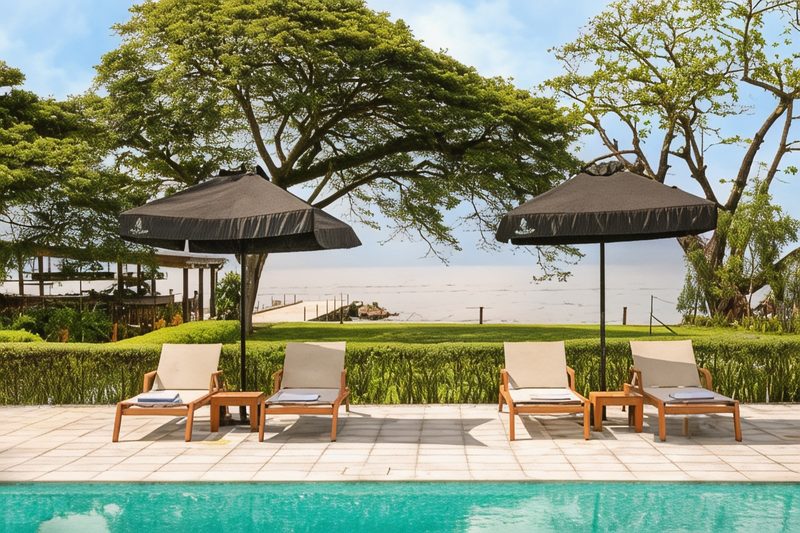
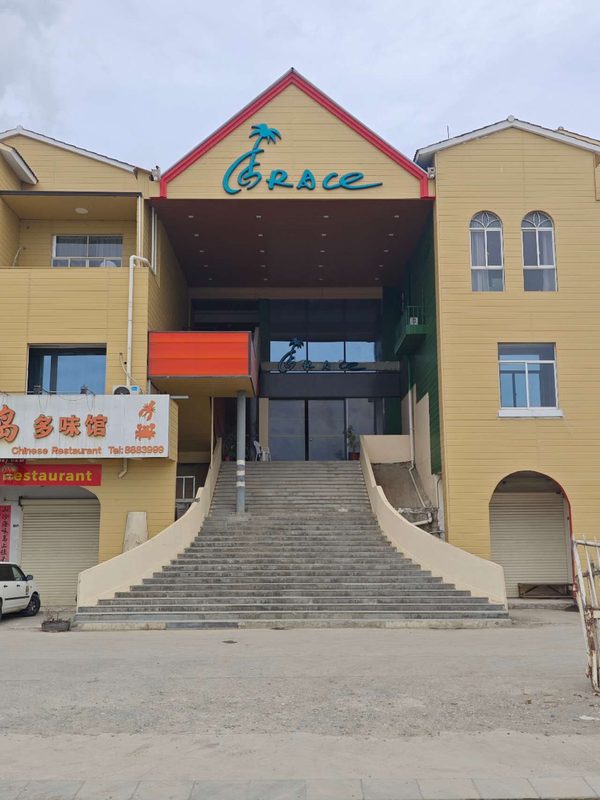
Where to Stay in Solomon Islands in April
Hand-picked hotels across price tiers for April travellers.
Public Holidays in April
Dates that affect opening hours, transport and crowds
Good Friday
Observed nationwide as a public holiday.
Holy Saturday
Observed nationwide as a public holiday.
Easter Monday
Observed nationwide as a public holiday.
Packing Checklist
Bookmark this page — your progress is saved between visits
Need the full list with shopping links?
Climate-specific gear, brand recommendations, and what to leave at home.
View Solomon Islands Packing List →Essential Tips
Insider knowledge and common pitfalls to avoid
Insider Knowledge
The Solomon Islands Dollar fluctuates. ATMs exist only in Honiara, where they sometimes run dry over weekends. Bring enough US or Australian dollars in cash to cover your entire outer island itinerary. Exchange them at the bank in Honiara before you fly out. Guesthouses and village stays on the outer islands operate entirely on cash. There is no backup if you run short.
Betel nut is the social currency of the Solomon Islands. Being offered a nut wrapped in mustard-coated pepper leaf is a gesture of welcome, not a health hazard to panic over. You do not have to chew it. Accept it with both hands and a smile, then quietly pocket it. That is the gracious move. The red-stained teeth and lips you see on almost every adult are betel. The red splotches on sidewalks are not blood: they are spat betel juice. It is everywhere. It is completely normal.
Domestic flights on Solomon Airlines are the lifeline between provinces. In April they cancel more frequently than the published schedule suggests. Never book a tight international connection through Honiara on the same day as a domestic flight from the outer islands. Build in at least a full buffer day, ideally two. Carry your essential medication and documents in your carry-on. Checked luggage arrives on a later flight regularly.
The phrase 'Solomon Time' is not a joke. It is an operating principle. Boats leave when they are full, not when the schedule says. Guides arrive when they arrive. Fighting this will ruin your trip. Embracing it will transform it. Bring a book. Sit in the shade. Watch the kids fishing off the wharf. Let the pace of the islands become your pace. April's low tourist density makes this easier. There is nobody around to reinforce your urgency.
Avoid These Mistakes
Do not treat the Solomon Islands like a resort destination. There are no overwater bungalows, no swim-up bars, no concierge desks. This is raw, unpolished Pacific travel with basic accommodation, limited menus, and infrastructure that requires patience and flexibility. Travelers who arrive expecting Fiji-level comfort leave disappointed. Those who arrive expecting adventure and cultural immersion find something far more valuable.
Do not skip antimalarial medication because 'it is just the Pacific.' Malaria is endemic throughout the Solomon Islands. It is transmitted by mosquitoes that are active at dawn and dusk. April's residual wet-season moisture means higher mosquito populations than the dry months. Consult a travel medicine clinic well before departure. Start your prophylaxis on schedule. Use repellent religiously. This is non-negotiable.
Avoid packing a rigid day-by-day itinerary. Do not become frustrated when it falls apart. April weather, unreliable domestic transport, and the general rhythm of island life mean that your plans will change, probably multiple times. The travelers who have the best experience in the Solomons hold their itinerary as a rough guide. They say yes to whatever presents itself when the original plan dissolves.
Ready to plan your trip to Solomon Islands?
Now that you've got the research covered, here's where to go next.
Explore More Activities in Solomon Islands
Didn't see anything interesting yet?
Browse Viator's full catalog of tours, day trips, food experiences, and private guides in Solomon Islands.
See All Solomon Islands Tours on Viator